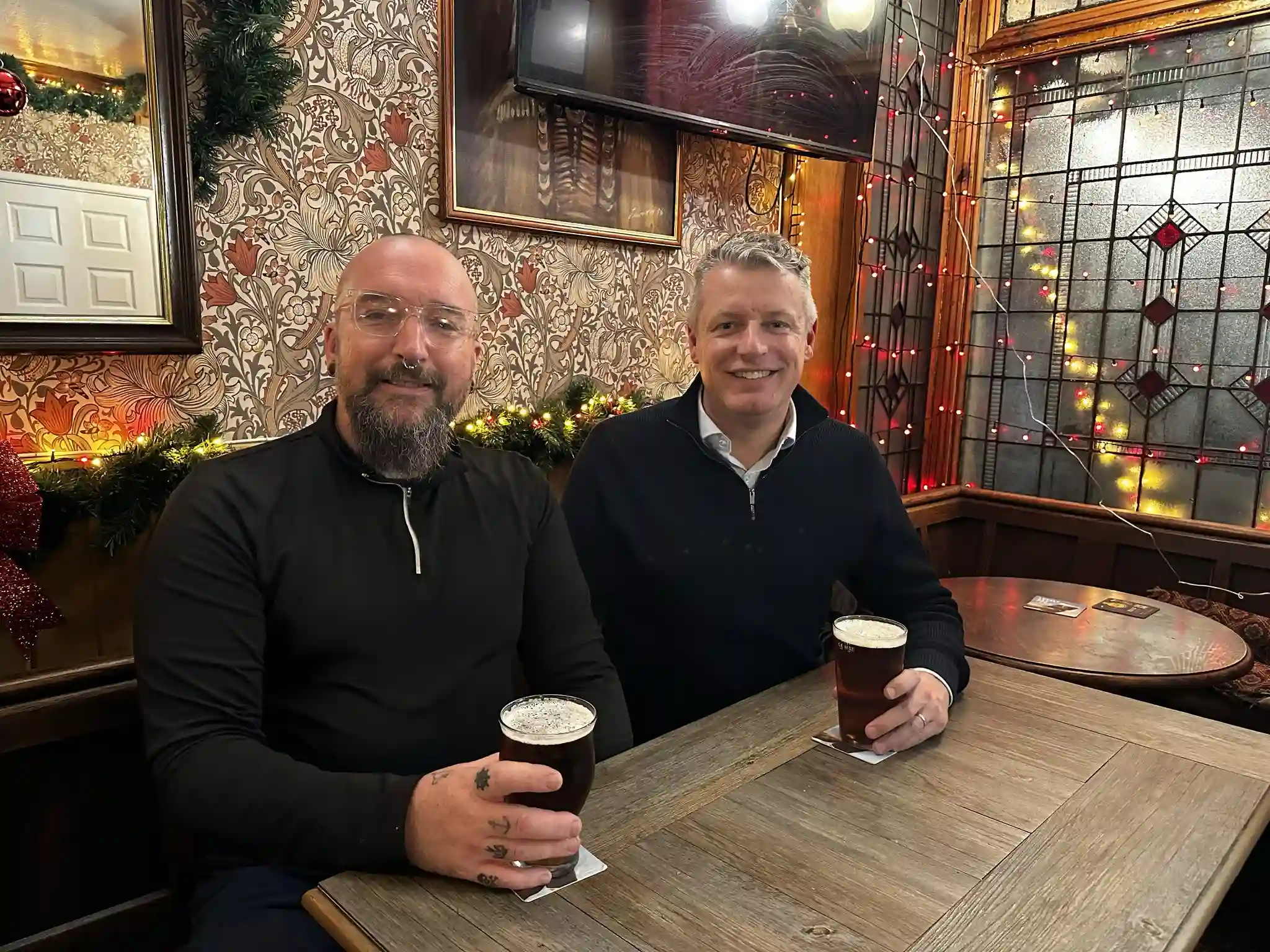
1. Business Rates and the Budget
My question:
How will pubs, venues, and hospitality businesses here in Plymouth be better off as a result of the Budget, and what changes to business rates can landlords and venue owners expect to feel at ground level in pounds rather than in government slogans?
Luke’s response (paraphrased):
Luke began by recognising that business rates have long been one of the most damaging elements of running a pub. He explained that the system was designed around large retail units and major commercial operators rather than the unique model of a pub that relies on footfall, atmosphere, staff presence, and community relationships. He acknowledged that landlords feel the pressure every single month and that it is impossible to talk about a thriving hospitality sector without addressing these fixed costs that remain constant even when the weather is bad, trade is slow, or the economy tightens.
He said the intention behind the recent Budget is to shift the balance away from penalising physical venues and towards giving them breathing space to operate. He made it clear that the government cannot expect pubs to reinvent themselves if the financial framework does not allow it. He referenced conversations with publicans who said that rate reductions are not theoretical, they directly affect whether they can invest in their premises, hire an extra member of staff, or avoid cutting hours during quieter months. He also reflected on the idea that business rates must reward venues that provide community value rather than treat pubs as though they are warehouses or storage facilities.
He said the success of the changes will not be measured by how confidently ministers announce them, but by whether publicans feel a reduction in their outgoings, see space to reinvest, and begin to plan beyond mere survival. He spoke about the need for policy that understands the rhythms of hospitality and supports the venues that make a place worth living in.
2. VAT and Tax Relief for Hospitality
My question:
VAT and tax relief are make-or-break issues for pubs. What is your position on VAT in hospitality, and do you expect any movement or reform that will help venues survive rather than close?
Luke’s response (paraphrased):
Luke recognised that VAT is one of the greatest structural disadvantages the hospitality sector faces. He said the current system treats pubs as if they operate with the same efficiencies and commercial models as online retailers or multinational supply chains. Pubs cannot outsource staff overseas, cannot automate what they do, and cannot operate with a skeleton workforce. Their costs are tied to the human experience they provide: a person pulls the pint, welcomes the customer, cleans the glass, knows the regulars, and pays local wages, yet VAT treats them as though they are another retail unit.
He explained that VAT pressures affect every decision a landlord makes, from pricing the pint to choosing whether to run entertainment or music, because every pound taken is scrutinised before it is earned. He said that many in the sector are calling for change because of how VAT affects their viability, and he understands why those concerns are so strongly expressed. He noted that unless the challenges created by VAT are acknowledged and addressed in future planning, closures will continue and the fabric of communities will shift as a result.
While he cannot speculate on future policy or commit to reform, he recognises that the sector needs clarity and space to invest in people, facilities, entertainment, food, and innovation. He acknowledged that the long term health of hospitality depends on creating conditions that allow pubs to remain open and contribute to local identity and community life, rather than operate on the edge of survival.
3. Investment, Defence Jobs and Plymouth After Six O’Clock
My question:
Plymouth will see significant defence investment, including companies such as Helsing, and a need to upskill and reskill local people for engineering and defence roles. That growth will bring more workers into the city and keep more home-grown talent here, but workers need more than jobs and housing. They need places to go and enjoy themselves. How can defence investment be matched by support for pubs, venues, and nightlife, so Plymouth becomes a city where people want to stay rather than somewhere that shuts at six?
Luke’s response (paraphrased):
Luke responded immediately by saying that a city cannot call itself ambitious if people have nowhere to go once the working day ends. He spoke about the defence investments already taking shape and the large workforce that will follow. He said that if Plymouth is to become a hub for defence and advanced engineering, then it must also become a place where skilled workers want to anchor their lives. That does not stop at the factory gate or shipyard entrance. It carries into the evening when people decide whether to explore the city, meet friends, attend events, and spend their time and money locally.
He said pubs, grassroots venues, live music spaces, and cultural hubs are not pleasant extras, but part of the infrastructure that retains talent. He gave examples of cities that have grown economically yet lost people because the cultural offering failed to evolve alongside industry. He noted that if Plymouth becomes a city where workers clock off and immediately go home, then innovation, creativity, and civic pride are weakened. Defence investment, in his view, must be matched by investment in the cultural and social experiences that give a city identity.
He said pubs play a particular role in this. They are meeting points, civic rooms without booking forms, places where ideas and friendships begin, and where workforces that refit submarines and defence systems unwind. If Plymouth wants to keep the people it trains, it must give them something to be part of, and that includes venues that open their doors after six, not just retail space and road networks.
We now have a government minister stating openly that pubs, venues, and hospitality are not side notes or old-fashioned hangovers from another era. They sit alongside defence, education, and industry as part of how Plymouth grows and retains people. This isn’t nostalgia, it is policy thinking that places hospitality where it has always belonged: in the centre of civic life.
Plymouth is changing, and for the first time in years, the people who care about pubs, nightlife, heritage, and community are not shouting into the void. We are part of the discussion and the door is open. Let’s make sure the future of our city includes the places that bring us together rather than erase them.